
"Printykit" Website for Parents and Children
The "Printykit" website is a source of valuable information. The tips and tasks provided here are designed for the best parents in the world, helping them raise happy children by choosing the right path for their growth. Love, care, and joy are feelings every child needs. Parental care combined with useful information is the key to forming a smart, well-rounded, and content child. "Printykit" is the best website for parents and kids!
Child Development and Upbringing – Tips and Words of Wisdom
A baby begins to develop while still in the mother's womb. They react to voices, touch, and emotions, developing attention, hearing, and imagination. "Printykit" is the name of a dedicated section on our website focused on these and other developmental features. This section was created based on the reflections, doubts, and questions of parents. What does a mother need when she has an important question about upbringing? Simply browse for the answer on our website!
For example, here is a brief overview of child development stages:
- Up to one year: a child's hearing, vision, memory, attention, and speech are formed. Infants learn about the world through sounds and visual objects, so parents should talk to their baby, smile, show bright toys, and make noise with them. This encourages communication skills. When a baby learns to hold their head up, stand on their feet, or sit, they begin to show willpower. Amazing persistence, isn't it?
- Ages 1–3: toddlers develop speech. It is worth noting that imitating animal sounds is an effective and simple exercise for speech development. Keep in mind that children absorb new information more easily in the morning after breakfast. Visiting a zoo, traveling to the countryside, or watching a documentary about animals will stimulate speech and imagination. Character is also formed at this age. Discipline is the foundation of a good character. Detailed information on modern approaches to discipline is available in a separate section of our site.
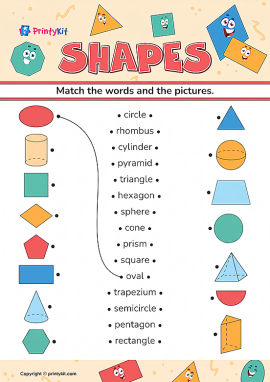
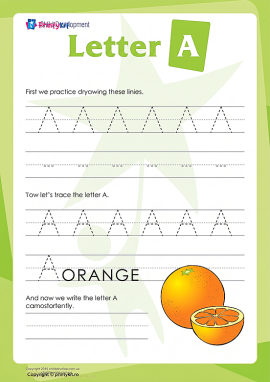
- Ages 3–5: development is closely linked to attending kindergarten. There, children learn to draw, recite short poems, sing songs, speak coherently, play logic games, write numbers, and distinguish shapes and sizes. Kindergarten activities improve memory, speech, thinking, fantasy, and fine motor skills. Parents should continue to refine these skills at home.
- Ages 6–7: development occurs through play with peers, as well as through age-appropriate household chores and educational activities.
Early Child Development – Pros and Cons
Child development and upbringing are vital tasks. Experts have created special educational methods to help develop a child from an early age.
A child's happiness is a cornerstone of their development. Parents should read and analyze the tips and rules on our site to help them decide on the best development paths.
The "Printykit" website also allows parents to weigh the pros and cons of early development. For instance, downsides may include a reduction in free time for play or cartoons, as early development often involves daily structured lessons. Consequently, such a child's childhood might differ slightly from that of their peers, potentially leading to fatigue or fussiness.
On the other hand, the benefits include the early formation of memory, logical thinking, willpower, and intellect. This is achieved through developmental activities. At ages 1–2, children can begin learning foreign languages and distinguishing colors, shapes, and scents. Such a child may intellectually outperform their peers.
At the same time, conflicts, negative emotions, or overconfidence are not ruled out. How to avoid them? Expert answers to these complex questions are presented in a dedicated section of our site.
Engaging Puzzles, Learning Tools, and Practical Tasks for Kids
The specialized sections of our website will help you navigate these categories of children's tasks. Just hover your cursor to discover engaging activities for development and school readiness:
- Children's puzzles – rebuses, jigsaw puzzles, mazes, and crosswords that develop logic, memory, attention, and hand motor skills.
- "Learning tools" (Rozvyvalky) – teach new skills and form psychological qualities. These include simple mazes, association pictures, instructions for cooking simple meals, algorithms for tidying up a closet, exercises for identifying parts of a whole, games, and appliqués.
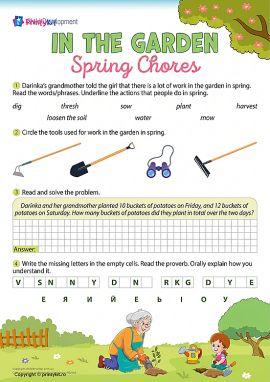
- Practical tasks for various ages – develop fine motor skills, attention, and thinking. These include math problems, spelling exercises, and drawing. Identifying geometric shapes, colors, and quantities are effective ways to train a child's memory and cognitive abilities.
Visiting the "Printykit" website allows parents to clarify all the nuances related to upbringing and growth. Our site for moms and dads is useful, informative, and inspiring. How to raise children? The answer is right here!